




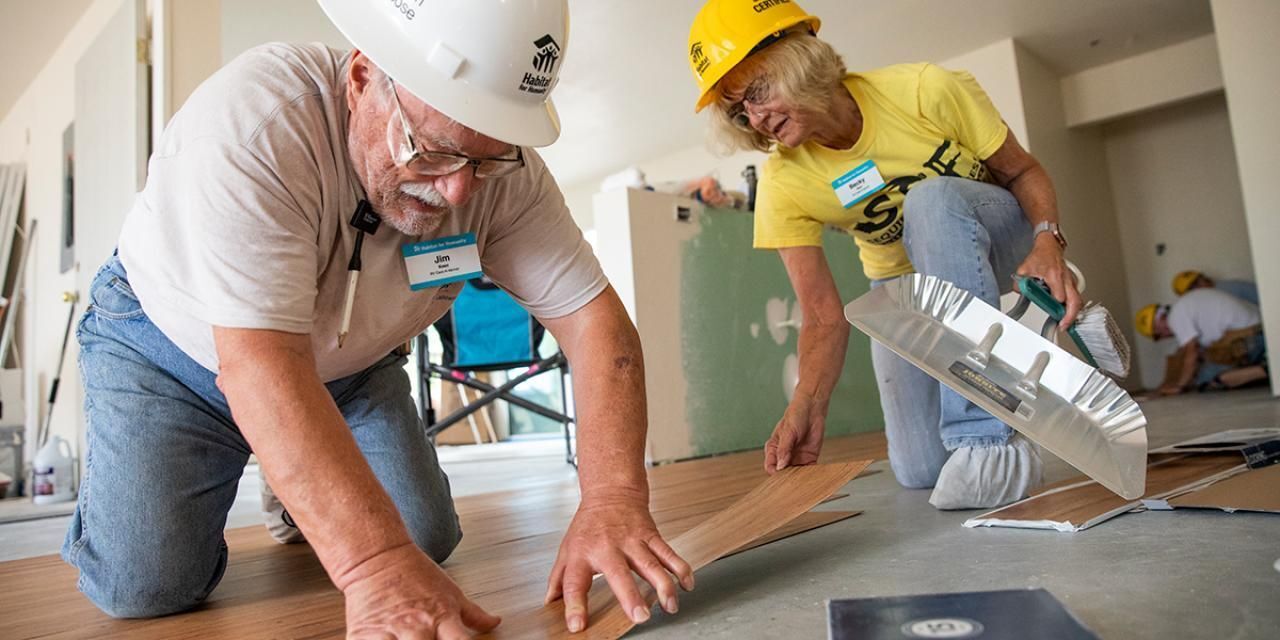
At Habitat, we work with our volunteers, homeowners and staff to ensure each build site is a safe working environment.
Your team leader, construction site supervisor and trained Habitat Competent Person have experience reducing hazards, but you as a volunteer can take measures to ensure you and your team’s safety as well.
You can also download a PDF of these safety tips for volunteers.
Attitude for safety
Safety begins with a safe attitude. Please keep the following in mind when working on site.
- Think before you begin a task and don’t rush.
- Ask the Habitat Competent Person or team leader if you are unsure how to use a tool or perform a task.
- Avoid distractions and concentrate on the task.
- Inspect all power tools, hand tools, ladders and scaffolding before use.
- Know where the Emergency Action Plan, first-aid kit and fire extinguisher are located.
- Immediately advise the Habitat Competent Person or team leader of any unsafe or hazardous tools or conditions.
Dressing for work
Dressing in a way that is practical and safe for working on site is important, and loose or inappropriate clothing can be dangerous. Follow these basic guidelines.
- Wear clothes and gloves that fit and are appropriate for the work and weather conditions.
- At the job site, wear work or hiking boots or sturdy shoes that protect from falling objects. Thick, non-slip soles are safest. Any volunteer wearing sandals or other inappropriate footwear will not be permitted to remain on site.
Personal protective equipment
Habitat best practice is to wear:
- Hardhats and safety glasses at all times on an active job site.
- Hearing protection whenever exposed to loud or intermittent noise.
- Respiratory protection when inhalation hazards are present.
Personal precautions
Though you may be enthusiastic to contribute, be sure to volunteer for the tasks you feel you can safely accomplish.
- Lifting. Do not lift beyond your safe lifting ability. Always use the proper lifting technique: bent legs and straight, vertical back. Ask for help.
- Overexertion. Recognize your limits. Avoid struggling to keep up with other team members. When you get tired, take a break; sit down and rest frequently. Habitat building is not a competitive event.
- Hydration. Physical work causes you to perspire, resulting in dehydration. Be sure to replenish your lost liquids. Every job site will have drinking water available.
- Sun. Many job sites are without shade. At the first indication of sunburn, reapply sunscreen and cover exposed areas with clothing.
Personal tools and equipment
Any tool or equipment including personal protective equipment that you bring to the job site must be inspected and approved by the Habitat Competent Person prior to use.
Maintaining a safe, clean and secure job site
- Position building materials and supplies in an order that allows adequate aisles and walkways.
- Clean up rubbish and scrap materials as you go, at least twice each day. Do not permit blocks of wood, nails, bolts, empty cans, pipe, wire or other materials to accumulate around the job site where they interfere with the work and constitute a safety and fire hazard.
- Restack unused building materials and serviceable scraps.
- Sweep out the house regularly.
- Remove nails from discarded boards or, at a minimum, bend them over.
- Keep tools and equipment that are not in use in their proper place. This protects both the tools and workers.
- Never leave a job site unattended unless all tools and materials have been properly secured.
- The job site should be cleaned and the tools put away before ending the workday.
This safety video from Habitat for Humanity of East and Central Pasco County helps prepare individual and group volunteers for working on our construction sites in Zephyrhills, Dade City, Wesley Chapel, and surrounding areas.
Before arriving at your volunteer build day, please take a few minutes to watch this video. It outlines important safety rules and expectations that help keep our volunteers, staff, and homeowners safe.